Sightlines · a mini film course
The Mind Is a Haunted House: Eleven Films Where the Camera Knows More Than Anyone On Screen
Every film in this set is, one way or another, about a person who cannot fully see themselves — and about a camera that can. These are thrillers, horror films, noirs, even a dark comedy, but they share a deeper wiring: the filmmaking itself carries knowledge the characters don't have. A ceiling fan that keeps appearing. A numbered key. A color that floods the frame. A voice that keeps singing after the singer falls. Watch these films for the gap between what the people inside them understand and what the images are quietly telling you — because that gap is where every one of these directors does their real work. And notice how often the plot's engine is a mind under pressure: repression, grief, fractured identity, obsession. In this company, the detective story becomes a self-portrait, and space itself — a motel, a house, a marriage — becomes a map of someone's interior.
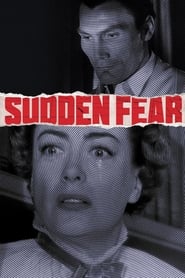
Sudden Fear (1952)
Start here, with the purest version of the machine. A woman alone in a dark room overhears something she was never meant to hear, and for several minutes Charles Lang's Oscar-nominated black-and-white photography holds on Joan Crawford's face as it travels a whole arc — contentment, horror, cold calculation — almost without a word. Watch how the film splits visually in two: warm and open in its San Francisco courtship, then darkening into deep shadow and oppressive interiors as trust curdles. It's a film about performance and authenticity — an actor husband, a playwright wife — where the question is whether love itself is staged.
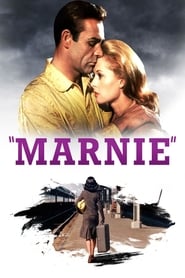
Marnie (1964)
Hitchcock opens on a woman's back, a yellow handbag, a railway platform — withholding the very thing thrillers usually hand you first: someone to look through. Notice the temperature of the gaze: long lenses flatten Tippi Hedren against the architecture, two-shots are held past comfort, and the camera studies her like a clinician studies a patient — which implicates your curiosity too. Then watch for the red: a spill of ink, a jockey's jacket, and the frame floods crimson. It's not a symbol you decode; it's a private storm you're made to feel from inside.
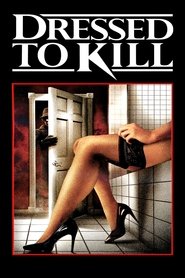
Dressed to Kill (1980)
De Palma is Hitchcock's most devoted student, and this film is his thesis on looking. The centerpiece is a nearly wordless museum sequence — several minutes of gliding camera, climbing strings, and rooms that seem to fold back on themselves — built entirely out of glances: who sees whom, who knows they're seen, and what the camera knows that nobody inside the frame does. Watch for the split-diopter shots that keep near and far in simultaneous sharp focus, and for the mirrors that double and fragment every figure. The film makes watching pleasurable, then makes you notice you're enjoying it.
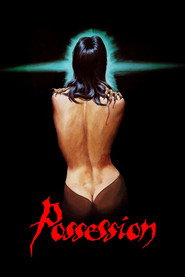
Possession (1981)
Here the camera stops observing and starts participating. Bruno Nuytten's wide-angle, close-in framing turns Berlin apartments into pressurized boxes; the camera circles the actors and refuses to settle. Żuławski directed his cast to the edge of collapse, treating operatic intensity as a deliberate system rather than excess — so watch for the famous underpass scene, where Isabelle Adjani's body simply undergoes something no plot could contain. This is a marital-breakdown drama turned inside out, where divorce is staged as cosmic catastrophe.
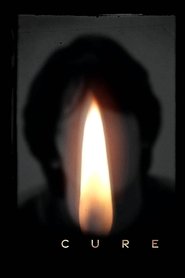
Cure (1997)
Kurosawa answers the flashy serial-killer cycle of the '90s by subtraction: no grand design, no charismatic mastermind, violence kept mostly off-frame. Watch the distance — muted grays, held wide compositions that keep figures small in their environments, so dread comes from space itself rather than close-ups. And watch the hypnosis scenes: a flame, a drip of water, a patient voice asking "who are you?" — the film is quietly using the oldest tools of cinema itself (a point of light in the dark, a watcher emptied of resistance) on you as much as on its characters.
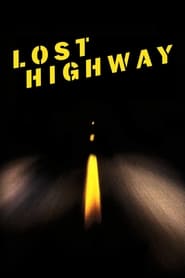
Lost Highway (1997)
Peter Deming photographs the Madison house as near-abstract darkness — rooms defined by what can't be seen, characters walking into blackness and dematerializing. Lynch takes the full noir kit (femme fatale, gangster, surveillance, doomed Los Angeles) and strips out motive, explanation, and detection. Don't try to solve it; watch instead for how the film refuses to separate what's happening from what's dreamed or remembered — one actress, two women, and no cut that tells you which is real. Hold onto the opening intercom message. The whole film is folded inside it.

Mulholland Drive (2001)
Deming again, now mapping two lighting registers onto two psychological worlds — golden Hollywood glow against something colder — as Lynch inherits Sunset Boulevard's great subject: the industry that promises transformation and delivers humiliation. The essential scene is Club Silencio, where a voice keeps singing after the singer falls; it's Lynch showing you his engine — emotion that's real and manufactured at once. Watch for cuts driven by emotional association rather than cause and effect, and let the film teach you to read images instead of merely following them.
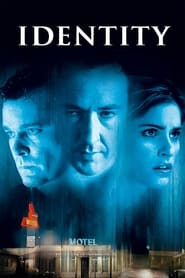
Identity (2003)
The most classical construction here: Agatha Christie's isolated-strangers-countdown blueprint crossed with the rain-soaked motel of Psycho and the storm-stranded travelers of The Old Dark House. Watch Phedon Papamichael's palette — sodium-vapor amber, cold blue night, silver rain on every reflective surface — and notice how deliberately artificial and hermetic the motel feels, like a stage set. That staginess is a clue, not a flaw. Keep your eye on the numbered keys, and on what they might actually be counting.

Black Swan (2010)
Watch the back of Nina's head. Matthew Libatique's camera rides inches behind Natalie Portman's shoulder through corridors and dressing rooms — never letting you see quite what she sees, never letting you stand safely apart, intimacy curdling into surveillance. Then watch the mirrors, which a ballet studio supplies wall to wall: Nina multiplied, fragmented, reflections that lag a half-beat behind the body. It's a backstage melodrama fused to body horror, descended from The Red Shoes and Polanski's apartment films, about a perfectionism that eats its host.
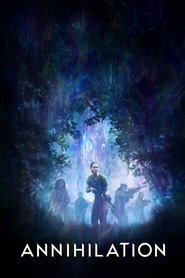
Annihilation (2018)
Rob Hardy renders the Shimmer as a soap-bubble membrane tinting everything inside — greens pushed toxic, water given an oily refraction — and Garland builds his expedition on Tarkovsky's forbidden Zone. The key scene is small: two deer moving in perfect mirrored unison, and the women simply watching, because there is nothing to do. That's the film's method — competent, armed people stripped of anything to act on, left only to see and hear. Let the near-wordless lighthouse passage wash over you as pure image and sound; it's meant as an echo of 2001's surrender of story to sensation.

Twinless (2025)
The newest film here, and the sly comic key to the whole set: a man in a grief support group mourning a twin he never had. Sweeney's dialogue measures the gap between what characters say and what they mean, and Greg Cotten's controlled, slightly clinical compositions hold on faces a beat too long, letting two-shots curdle so you're never sure how much menace hides under the comedy. It inherits the dual-role technical tradition of Dead Ringers and Adaptation, and asks a question every film on this list circles: can something built on a fabrication become genuinely real?
Watched together, these eleven films train a particular muscle: the habit of noticing what the image is doing independently of the story. You'll start to feel it — the moment a camera stops chasing action and starts watching a person come apart; the moment a room, a motel, a mirror stops being a place and becomes a portrait of a mind; the moment you realize you know something a character doesn't, and that the discomfort of knowing is the point. From Crawford's face in 1952 to a support-group folding chair in 2025, the through-line holds: the self is the great unsolved case, and cinema — patient, watchful, sometimes cruel — is its investigator. Watch in any order, but watch closely. These films reward the viewer who notices the ceiling fan.