Sightlines · a mini film course
When Seeing Is Not Enough: Films About the Limits of Looking
There is a question running underneath all ten of these films, so quietly you might not notice it at first: what good does it do to perceive clearly when you cannot act on what you see? Each of these films places a character — a detective, a wife, a spy, a judge's daughter, a reporter, a drifter — in a situation they can read perfectly well and change only partially, or not at all. The world keeps its secrets, or gives them up too late, or gives them up and it makes no difference. What holds this programme together is not genre or geography but a shared anxiety about whether looking, knowing, and doing are as connected as movies usually promise us they are.

The Postman Always Rings Twice (1981)
Watch the light — or rather, the absence of glamour in it. Cinematographer Sven Nykvist, Ingmar Bergman's great collaborator, lights this Depression roadhouse as if the sun were simply there, indifferent and flat, falling through whatever window happens to be open. Nobody is beautified. What to notice is how this deliberate plainness collapses the distance between hunger for food, hunger for a body, and hunger for a different life entirely. The diner's kitchen is where desire and economics and violence all happen in the same breath. Rafelson and screenwriter David Mamet strip the story back to appetite — raw, undressed, without the moralizing machinery the original 1940s Hollywood version was forced to apply. Watch how the film refuses to separate what people want from what they're willing to do to get it.
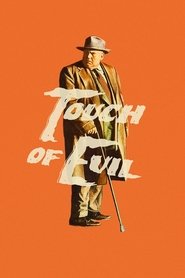
Touch of Evil (1958)
The film opens with one of the most famous unbroken shots in cinema history — a car, a ticking trunk, a honeymoon couple, an entire border town — held together for three continuous minutes without a cut. Before anything has happened, Welles has made an argument: everything here is already connected, the crime and the corruption and the romance all breathe the same air. Then watch how he photographs his own character, the enormous, morally ruined detective Quinlan: from the floor, with the ceiling pressing down, wide-angle lenses distorting his face into something almost geological. The camera that opened the film by revealing a whole world now photographs one man as a trap. Hold those two images together — the camera that cannot stop telling the truth, and the cop who cannot stop forging it — because the whole film lives in that gap.
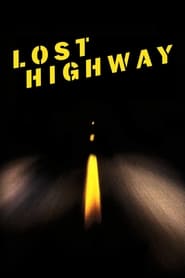
Lost Highway (1997)
Peter Deming photographs the Madison house as near-abstract darkness — rooms defined by what you cannot see, characters who walk into shadow and simply cease to exist visually. Against this, the film cuts to bleached, sun-struck California exteriors that feel like a different film stock entirely. Notice how Lynch uses this opposition not to show two places but to suggest two states of mind that may be one mind. The film is structured as a loop — pay attention to the intercom at the front door, early and late, and to the way Patricia Arquette's two characters are lit and costumed differently without the film ever explaining why this matters. Lynch is not withholding information to be cruel; he is genuinely proposing that identity, guilt, and time might work the way a Möbius strip works, with no seam you can put your finger on.

The Seed of the Sacred Fig (2024)
Watch what the apartment does to people. Mohammad Rasoulof shoots Tehran domestic space with a clinical, almost architectural precision — doorframes become internal frames, corridors become sightlines, the rooms that should mean safety begin to feel like the cells of a very comfortable prison. Notice how a single object, introduced quietly and without emphasis early in the film, organises everything that follows once it disappears. Rasoulof shot this film in secret, under threat of arrest, and that pressure is somehow visible in the filmmaking: the camera watches this family with the attentiveness of someone who knows they may not get a second take. The film's great formal achievement is making the logic of a surveillance state feel not like a political abstraction but like a specific Tuesday evening in a specific apartment.
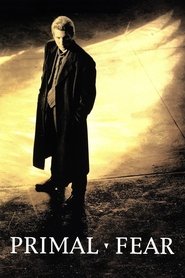
Primal Fear (1996)
The film is interested in performance — in what it means to sustain a character so completely that the character becomes realer than whoever was doing the performing. Michael Chapman's cinematography is deliberately functional, clean and information-rich in the courtroom tradition: what you see is what there is, or so the film wants you to believe. What to watch for is Edward Norton's work, particularly in the scenes where something beneath the surface of his character seems to shift — not through cutting, not through special effects, but in continuous shot, in the actor's body. The film is staged in the genre most committed to establishing truth — a murder trial — and it uses that commitment as a trap. Notice how the courtroom's procedural confidence gradually becomes the most ironic element in the frame.
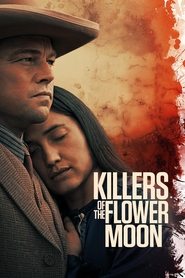
Killers of the Flower Moon (2023)
Pay attention to when Scorsese's camera moves and when it does not, because this is a director who built his reputation on motion — tracking shots as a grammar of appetite and energy — making a film that increasingly goes still. Rodrigo Prieto's widescreen photography places oil derricks on the Oklahoma horizon in amber, golden light so beautiful it takes a moment to register as accusation. The film's moral engine is in Lily Gladstone's face, which the camera watches at length with a patience entirely foreign to Scorsese's earlier crime films. She is not driving the action; she is enduring it, seeing it, unable to stop it. Notice how the film keeps returning to her eyes at moments when a conventional thriller would cut to the next plot development. The stillness is the argument.
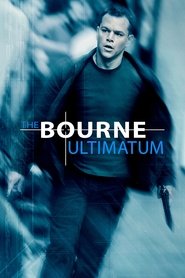
The Bourne Ultimatum (2007)
Oliver Wood's camera is almost never at rest — even in a quiet conversation, it drifts and reframes, as if always expecting violence from a direction not yet identified. This is usually described as chaos cinema, but watch it more carefully: the handheld restlessness is not random. In the Waterloo Station sequence, the film constructs three distinct layers of surveillance — Bourne watching, operatives watching Bourne through CCTV, a reporter who cannot see at all — and the camera's own relentless looking becomes a fourth layer. Nobody fires a weapon in this sequence; the drama is conducted entirely through eyes and earpieces. Greengrass is making a film about the act of perception itself, about what it costs and what it misses, and the formal texture — the grain, the drift, the refusal to settle — is the content, not merely the style.
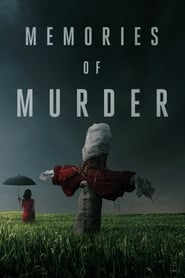
Memories of Murder (2003)
Kim Hyung-goo's camera does something unusual for a detective film: it gives the Korean rice-paddy landscape the same visual weight as the human figures moving through it. When a body is found, the camera does not rush to isolate it dramatically — it drifts sideways, slow and wide, letting the fields absorb the crime as they might absorb rainfall. This patience is the film's moral position before it is a stylistic choice. Watch how Bong Joon-ho systematically gives his detectives everything the genre promises — leads, witnesses, physical evidence, a suspect — and then watches each piece fail, not through dramatic reversal but through the dull, grinding inadequacy of institutions under pressure. The anamorphic widescreen frame, wider than the eye expects, keeps making space that investigation cannot fill.
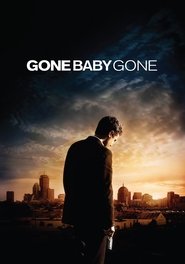
Gone Baby Gone (2007)
Ben Affleck shoots Dorchester, Boston with wide lenses at close range, which means the neighbourhood is always pressing against the characters — you cannot aestheticise poverty from a comfortable distance here. The handheld work is restrained, used selectively rather than as a default atmosphere generator, which means when it appears you feel a specific kind of proximity being invoked. What to watch for is how the film earns its procedural patience: scenes of interrogation and source-work that Affleck refuses to truncate, actual locations whose social texture is legible in every frame. The film runs for much of its length as a completely convincing detective procedural, and then it arrives somewhere the genre rarely goes — a conclusion that is legally correct and morally vertiginous — and holds on a face with nothing left to do. That final stillness is what the whole film was building toward.
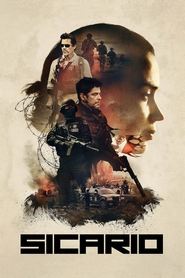
Sicario (2015)
Roger Deakins frames the Sonora desert as geological fact — vast, indifferent, dwarf-ing human figures without romanticising the space. Notice where Emily Blunt's character is placed in nearly every significant scene: in doorways, at the edges of rooms where decisions are being made, in the back seat of convoys travelling to destinations she has not been told. This spatial blocking is the film's thesis made visible. The thriller genre conventionally promises that a competent protagonist can perceive a situation and act to change it; Villeneuve spends two hours systematically honouring the first half of that promise while cancelling the second. Jóhann Jóhannsson's score deserves particular attention: it operates below comfortable hearing range in places, less music than a physical pressure the body registers before the mind does. The dread is architectural.
Why Watch These Together
What this set of films collectively teaches is that cinema has two very different relationships with action. Most of the entertainment we consume is built on the faith that seeing leads to doing: a character perceives, acts, and the world changes accordingly. These films are interested in the gap between perceiving and doing — the moment when seeing clearly is not enough, when institutions fail their own logic, when identity dissolves under pressure, when complicity is revealed not as villainy but as the slow erosion of the will to resist.
Across ten films, three continents, and six decades, that gap keeps opening in different shapes: the drifting camera that absorbs a corpse into a landscape, the still camera that watches complicity unfold in plain sight, the handheld camera that makes looking itself feel costly and mortal. Watch these films in sequence and you will develop a new attentiveness — not just to what characters do, but to what they see, what they cannot unsee, and what seeing, in the end, costs them.