Sightlines · a mini film course
There's a moment early in The French Connection where a cop stands on a freezing Brooklyn sidewalk eating cold pizza while, through a restaurant window, the man he's hunting enjoys wine at a white tablecloth. Nobody explains it. The film just lets you stand on the cold side of the glass and look. That's the thread running through this set: eleven crime films that are less about crime than about watching — how a camera observes a body, how a coat or a glass of milk or a laid-out cleaver tells you everything a speech never could, and how the genre's famous engine of action (see a problem, pull a trigger, cut) keeps getting deliberately slowed, jammed, or run in reverse. Each of these films takes the gangster picture's machinery and does something sly with it. Watch them together and you start to see the machinery itself.
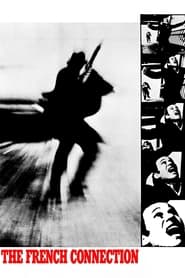
The French Connection (1971)
Shot on real winter streets in greys, browns, and sickly fluorescent greens, this is the film that made the police procedural feel like documentary — a lineage running back through The Naked City's hidden cameras and Breathless's restless handheld grammar. Watch how the surveillance sequences use long telephoto lenses, flattening the city so hunter and hunted seem pressed into the same crowded plane. And watch the asymmetry: the crude, obsessive cop versus the elegant, protected trafficker. The film never tells you what to make of that gulf — it just makes you feel the cold.
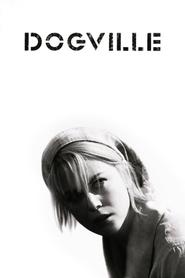
Dogville (2003)
Von Trier removes the town entirely: chalk lines on a black floor, a sign reading "Elm St.," a dog that exists only as a word. Yet the camera — handheld, hunting among the actors — refuses to treat any of it as a stage play. Watch what happens when you can see through every wall: privacy vanishes, and you become witness to everything at once. With the world subtracted, every gesture becomes legible, and the film's questions about charity, dependence, and what kindness costs land with nothing to soften them.
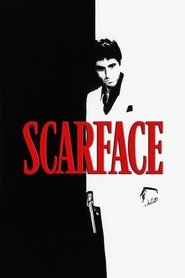
Scarface (1983)
De Palma remakes the 1932 Hawks film beat for beat, but in saturated neon pinks and blues, tropical glare, and cold white-on-white luxury, all held in wide anamorphic frames. Watch how the recognizable social world — nightclubs, mansions, business meetings — keeps feeling like a thin skin over something rawer: this isn't a story about a man with motives so much as an appetite wearing a man. Note too the genre's old trick, inherited from The Public Enemy, of staging brutality at the edge of the frame — and how De Palma decides when to honor that tradition and when to abandon it.
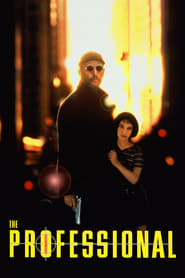
Léon: The Professional (1994)
Before you see the hit man work, you see him tend things — a houseplant, a glass of milk, sit-ups in the dark. Besson inherits Melville's grammar of the disciplined, near-silent professional (Le Samouraï, Le Cercle Rouge), then keeps switching the current off: between jobs, the film simply holds on Jean Reno's still, unreadable face. Watch the palette — warm ambers in the spaces of refuge, cooler tones where violence and institutions live — and watch how much of the film happens in close-up, feeling registered but never released.
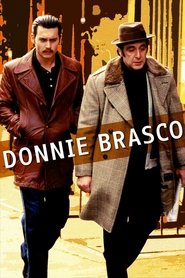
Donnie Brasco (1997)
Watch Johnny Depp's face in the long-held close-ups: he's always slightly behind his own eyes, a man whose job is to watch himself work a room. Where Goodfellas demythologized the mob through virtuosity, this film does it through reduction — washed-out grays and ambers, a city in permanent late autumn, a camera that observes rather than performs. It's built on Lumet's template (Prince of the City, Serpico): the undercover man who sees everything with terrible clarity and can act on almost none of it. The film's tension lives in that paralysis.
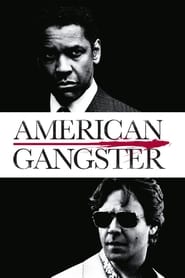
American Gangster (2007)
Read the whole film through the wardrobe. Frank Lucas dresses like an accountant because invisibility is his first business principle; the film's turning gesture is a chinchilla coat. Watch how Savides splits the visual world in two — the amber warmth of Lucas's self-made luxury against the institutional grey of the detective's grind — and how Scott, the informed outsider to American mythology, treats the drug empire as pure business analysis: branding, market share, vertical integration. Bodies and postures carry the argument; the Thanksgiving table says more than any monologue.
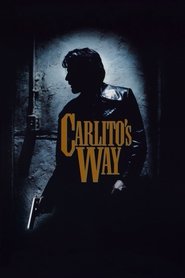
Carlito's Way (1993)
De Palma opens on a gurney — his hero shot, wheeled fast under sliding ceiling lights, a voice narrating from somewhere just past the body. This is the old noir architecture of Double Indemnity and Sunset Boulevard: tell the story from its endpoint, so you watch not for what but for how. Note the camera's controlled expressionism — tilting to suggest instability, pulling back to show a man hemmed in by space — and the way the whole New York underworld operates not as backdrop but as pressure, leaning on a man who sincerely wants to become someone else.
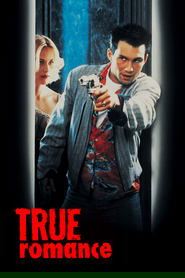
True Romance (1993)
Val Kilmer's Elvis appears in a bathroom mirror giving advice — no dream-dissolve, no signal, shot dead literal and lit like a perfume ad. Hold on that image: this is a film about a man assembled from other people's pictures, a direct descendant of Godard's Bogart-worshipping hero in Breathless, dropped into the lovers-on-the-run lineage of Gun Crazy and Bonnie and Clyde. Watch Tony Scott's bruised blues and molten ambers, saturated to the edge of abstraction — image as pure sensation — and watch how comfortably extreme tenderness and extreme violence share the same frame.
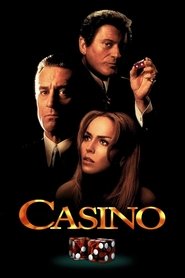
Casino (1995)
The opening gives the game away on purpose: a man, a car, a column of fire, a body tumbling in slow motion to Bach. Then the voice starts explaining. With "what happens next" switched off, watch what Scorsese switches on instead — long Steadicam glides through the casino's amber-and-gold machinery, overlit harshness at the pool, freeze-frames punctuating a slow self-destruction, ironic pop songs cutting against the violence. It's the Citizen Kane move — narrate the empire from its wreckage — performed at epic length, with an entrance in warm backlight that marks desire and danger as the same thing.
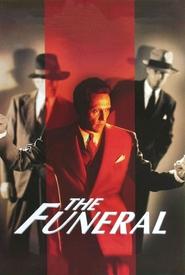
The Funeral (1996)
Ferrara opens where a gangster picture is supposed to end: a coffin in the front room, candles burning, the camera returning to the dead youngest brother as the still point everything orbits. The revenge plot is present but drained of its power to resolve anything; the past keeps interrupting the wake. Watch Kelsch's deep chiaroscuro — faces emerging from darkness, interiors lit by a few practical sources — and the film's genuinely theological argument: men insisting their violence is freely chosen while everything in the film's structure suggests otherwise.
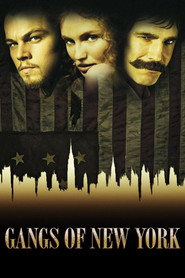
Gangs of New York (2002)
Watch Bill the Butcher lay out his cleavers like an argument, name the cuts of the human body like cuts of a hog, wrap himself in the flag as a piece of stagecraft. Day-Lewis plays a man whose every posture makes a whole social order visible — nativism as a theory performed in flesh. Ballhaus shoots the Five Points in soot, candlelight, and infernal reds, in the painterly tableau tradition of Visconti's The Leopard and Kubrick's Barry Lyndon — an American origin story physically built on Italian soundstages, which suits a film arguing the nation was forged in tribal violence rather than civic agreement.
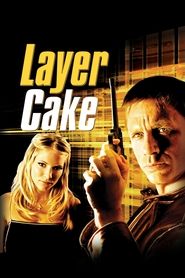
Layer Cake (2004)
He tells you first thing that he isn't a gangster — he's a businessman. Watch the film's surfaces: reflective glass, polished bars, a London that looks expensive rather than squalid, crisp symmetrical frames that mirror the narrator's belief in his own system. The joke, and the tragedy, is structural: this is the British gangster cycle (Get Carter, The Long Good Friday) revised from inside, about a man whose composure is being dismantled layer by layer while his voice-over keeps insisting he's still in charge. Watch the gap between what he says and what the frame shows.
Seen together, these films form a conversation across four decades about what the gangster picture is actually for. The genre promises action — see, decide, shoot, cut — and every film here bends that promise: toward surveillance and stillness, toward endings placed at beginnings, toward bodies and wardrobes that speak louder than plots, toward narrators who explain confidently while the images quietly contradict them. Watch for the coats and the cleavers, the milk and the chalk lines, the faces held a beat too long. The pleasure of this set isn't finding out what happens. It's learning to stand on the cold side of the glass and see how much a film can tell you before anyone says a word.