Sightlines · a mini film course
The Long Look: Gangsters, Watchers, and the Cost of the American Dream
Every film in this set is a crime film, but almost none of them are really about crime. They're about watching — cops watching criminals, criminals watching their backs, men watching their own lives from a strange distance, as if through glass. Again and again in these pictures, the camera refuses to chase. It waits. It holds on a face a beat too long. It stands on the cold side of a restaurant window and makes you feel the gulf between the hunter and the hunted. What connects this watchlist is a shared conviction that the gangster picture — that most action-packed of genres — becomes something richer when the action stops and someone simply has to look: at what they've built, at what they've lost, at what they've become. Watch these films for their surfaces (they are gorgeous, gritty, neon, amber, bruised-blue) but also for their stillnesses. That's where they live.
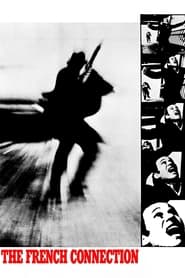
The French Connection (1971)
Shot on real New York streets in the dead of winter, in greys, browns, and the sickly green of fluorescent light — this film practically invented the modern texture of the American cop movie. Watch for the telephoto lens in the surveillance sequences, which flattens the city into something you're spying on rather than moving through. And watch the wordless class warfare of the stakeout scenes: the detective on the freezing sidewalk with cold pizza and worse coffee, his elegant French target enjoying a fine meal behind restaurant glass. Nobody comments. The film just lets you stand out in the cold and feel it — obsession as pathology, not heroism, told one pulled thread at a time.
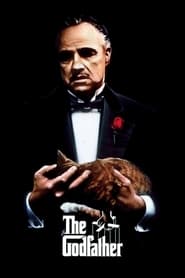
The Godfather (1972)
Gordon Willis lit Brando from almost directly overhead, flooding his eye sockets with shadow — a choice so radical the cinematography establishment didn't know what to do with it. Watch how darkness works here: it's never just dim lighting, it's a moral statement. You cannot see into Vito Corleone, and that blindness is his power. Notice too how the film refuses the old genre bargain — the classical gangster picture always punished its criminal by the end, and this one replaces condemnation with something far more unsettling.
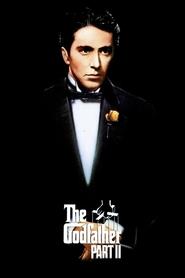
The Godfather Part II (1974)
Coppola braids two timelines — young Vito's rise in sun-warmed tenement New York, Michael's reign in the cold shadows of Lake Tahoe — so that each era silently comments on the other. Watch the light itself change between the two worlds; Willis gives the past and present entirely different temperatures. And notice how little Michael actually does in long stretches: this is a film where winning everything leaves a man with nothing to act upon, and the camera is brave enough to just sit with him.
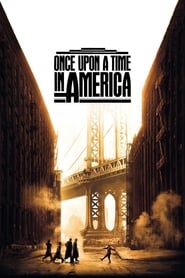
Once Upon a Time in America (1984)
Leone, the Italian who built his whole art out of American mythology, distinguishes his time periods by light: the childhood and Prohibition years glow honeyed and amber, sunlight through dust, while the later scenes go cold. Watch how time is allowed to stretch — Morricone's music was composed before shooting, and scenes were staged to its rhythms, which gives the film its strange operatic patience. And watch De Niro's stillness: his character mostly looks — through peepholes, across banquet tables, into the past — and that looking, not action, is the film's engine. The title says "Once Upon a Time" for a reason: this is a fairy tale about memory, and memories don't run in straight lines.
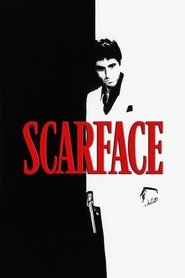
Scarface (1983)
De Palma trades the shadows of the 70s gangster film for neon pink, tropical glare, and white-on-white mansion luxury — appetite rendered in saturated widescreen. Watch how the film works in two layers: on the surface, a recognizable social world of nightclubs and business deals; underneath, something rawer, a hunger that keeps breaking through the furniture. Tony Montana's wants look like ambition, but watch closely and they behave more like compulsion — a man obeying a slope he can't see. It's a remake of the 1932 original, and it keeps that film's death-marker motifs and sibling obsession, transposed to Mariel-boatlift Miami.
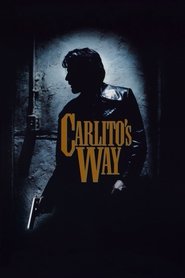
Carlito's Way (1993)
The film shows you a man on a gurney before it shows you anything else — so you spend two hours not asking what happens but how did he get here. Watch De Palma's camera, which is never neutral: it tilts to suggest instability, tracks in to isolate, pulls back to show a man hemmed in by the very spaces he moves through. This is the tragedy of self-revision — a man sincerely trying to become someone else while the old world's networks of obligation keep reaching for him — told with long takes and split-diopter shots that make New York itself feel like a closing hand.
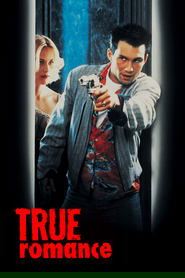
True Romance (1993)
Tony Scott shoots this lovers-on-the-run story in bruised blues and molten ambers, saturated nearly to abstraction — a crime film lit like a fever dream. Watch the scene where Elvis appears in a bathroom mirror to give advice: no wavy dissolve, no dream signal, just dead-literal staging. That's the key to the whole picture — its hero is a man assembled entirely from pop culture, comic books and movie posters, and the film's daring wager is that a self built from borrowed myths can still be real. It descends directly from Breathless and Bonnie and Clyde, and it earns the comparison.
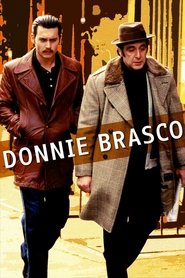
Donnie Brasco (1997)
Where other 90s crime films went for irony or excess, this one works through intimacy and reduction. Watch Johnny Depp's face in the long-held close-ups: he's always slightly behind his eyes, listening, laughing on cue, while a fraction of him watches the room and watches himself work it. The camera, which rarely performs, has found a man whose entire job is performance under mortal stakes. The palette of greys, browns, and washed-out amber — a city in permanent late autumn — matches a story about whether a stable self survives underneath a sustained role.
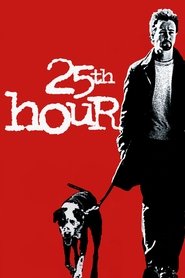
25th Hour (2002)
Watch how Spike Lee makes his protagonist move through New York: actor and camera mounted on the same rig, so he glides, weightless, while the city slides past behind him like a current he's no longer part of. The world moves; the man holds still. Rodrigo Prieto drains the film to a cold, bruised blue — the color of a city grieving (this is arguably the first major fiction film to absorb 9/11 as atmosphere rather than plot) and of a man confronting a future he has forfeited. Built around a single reckoning day, it's a film where all the action is already over, and everything that remains is feeling.
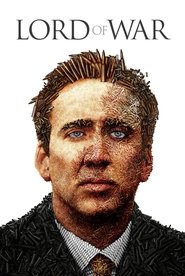
Lord of War (2005)
The opening is one of the great thesis statements in modern cinema: the camera rides a single bullet from the factory stamping press, across borders, into a magazine, into a chamber — a two-minute journey seen from no human point of view at all, the merchandise looking out of its own brass. Watch the tension between that cold, systemic eye and the breezy charm of the narrator, a salesman who could sell you the chair you're sitting in. The images are clean, glossy, seductive on purpose: the film wants you to feel the pull of the pitch even as it shows you the assembly line underneath.
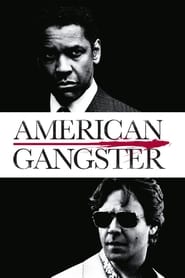
American Gangster (2007)
Ridley Scott, the informed outsider looking at American mythology, builds the film on a chromatic opposition: amber warmth and fur-coat luxury on one side, institutional grey and street cold on the other. Watch the wardrobe like a second script — the conservative grey suit of a man whose business depends on invisibility, and the chinchilla coat that announces him. Watch, too, how the film speaks fluent business language without irony: product quality, market share, brand names. It argues that the drug trade and capitalism share not just vocabulary but structure — and it lets you draw the conclusion yourself.
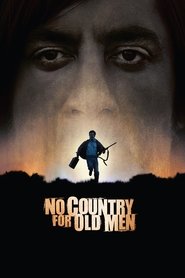
No Country for Old Men (2007)
Roger Deakins works in strategic restraint: long lenses compress figures against featureless desert, making the landscape a participant, emphasizing distance and exposure. Watch the gas-station coin-toss scene — nothing moves except the talk and the fluorescent hum, and the tension has nowhere to go. That's the film's method: it honors every mechanic of the chase thriller and then quietly withholds the satisfactions the machine promises. Listen, too — the sound design of rustles, drones, and room tone does the work a score usually does. This is the neo-Western's frontier stripped of heroism, and it will change how you watch every thriller after it.
Watched together, these films become a conversation across four decades — you'll see The French Connection's cold surveillance eye reborn in American Gangster, the braided timelines of The Godfather Part II radicalized in Once Upon a Time in America, the doomed-narrator structure of classic noir revived in Carlito's Way and turned into salesman's patter in Lord of War. But the deeper reward is learning to notice what these filmmakers ask of you: patience. Every one of these pictures trusts a held shot, a lit face, a silence, to carry meaning that dialogue never could. They're crime films that keep discovering the same secret — that the most gripping thing a camera can do is refuse to look away from a person who has run out of moves. Watch slowly. The stillness is the story.