Sightlines · a mini film course
The Watchers: Twelve Films About Looking, Waiting, and What the Eye Can't Fix
Somewhere in each of these films, someone is standing very still, watching. A cop on a freezing sidewalk staring through restaurant glass at a man eating a meal he'll never afford. An agent in the back seat of a convoy that won't say where it's going. An old man peering through a peephole at his own past. These twelve films — from gritty 70s procedurals to a rain-soaked modern Gotham — all run on the tension between seeing and doing. The classic detective story is a machine: notice a clue, act on it, close the case. These films keep that machine on screen and then, in a dozen different ways, show you what happens when it jams — when the watcher can see everything and change almost nothing, when the system being investigated is bigger than any act of investigation. Watch how each film handles that gap. It's where all the meaning lives.
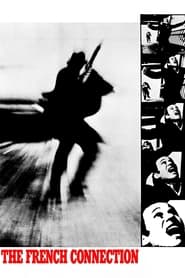
The French Connection (1971)
Watch the temperature of the frame — winter greys, fluorescent greens, wan streetlight yellows, a New York shot like a hostile environment rather than a backdrop. Friedkin and cinematographer Owen Roizman use long telephoto lenses in the surveillance scenes so you feel you're spying alongside the cops, and the film's sharpest moment of class commentary happens without a word: a cold cop with bad coffee on one side of a restaurant window, an elegant Frenchman with wine and white tablecloths on the other. Notice too that the detective work here is a matter of pulling threads — a tail, a frisk, a wiretap — each small act lighting up one more inch of something hidden. And notice that the obsession driving it all is treated as a sickness, not a virtue.
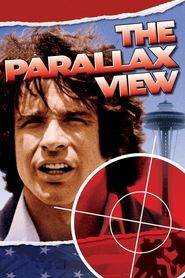
The Parallax View (1974)
Gordon Willis shoots people the way a corporation might see them: at extreme distance, from overhead, faces obscured, denied the intimacy Hollywood usually grants its heroes. The film's centerpiece is a five-minute montage — a recruitment "test" made of words and images spliced against their own meaning — and the unnerving trick is that it's aimed at you as much as at the character watching it. Pay attention to how the villain here isn't a person but a procedure: domestic, corporate, unhateful, simply processing people. Space itself becomes a trap in this film; watch how architecture swallows the human figure.
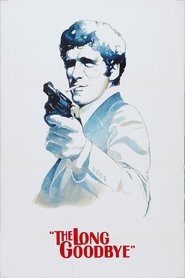
The Long Goodbye (1973)
Start with the cat food. Altman opens a murder mystery with a man trying to fool his cat with the wrong brand — and that errand is the whole film folded small: a private eye who still believes loyalty and effort mean something, drifting through a Los Angeles that has stopped keeping score. Vilmos Zsigmond's camera never sits still — it drifts, zooms, pans across rooms with its own curiosity, watching rather than chasing, refusing to underline what matters. Knowing that co-writer Leigh Brackett also wrote Bogart's The Big Sleep makes the film's gentle sabotage of every hard-boiled convention feel deliberate, even loving.
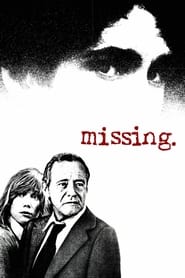
Missing (1982)
Costa-Gavras — who essentially invented the modern political thriller with Z — builds suspense here not from chases but from disclosure: an interview, a demand, a requested document, each one prying loose a piece of a hidden situation. Watch the two visual registers: mobile, handheld camerawork embedded in crowds and stadiums for the present-tense search, against more composed images elsewhere. And watch Jack Lemmon's Ed Horman arrive with two certainties — that his son is alive, that his government will help — and watch how the film uses accumulating bureaucratic detail, rather than speeches, to test them.
Once Upon a Time in America (1984)
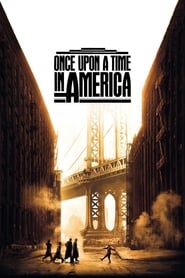
Leone's four-hour gangster epic is really a memory film — the title's "Once Upon a Time" is a promise of legend, not history. The time periods are distinguished by light itself: honeyed amber for childhood and Prohibition, a colder register elsewhere. Morricone's score was written before shooting, and the long set-pieces were staged to the music, which is why the film breathes at the pace of an opera rather than a thriller. Watch De Niro's Noodles, especially as an old man: he barely acts at all — he looks, remembers, waits — and that passivity isn't a flaw, it's the engine. Time is allowed to stretch here until it becomes the subject.
Léon: The Professional (1994)
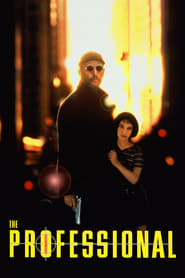
A hit man drinks milk, does sit-ups in the dark, and waters a houseplant he calls his only friend. Before Besson shows Léon killing anyone, he shows him tending things — and the film lives in that gap. Watch how the movie alternates between two modes: crisp, procedural action inherited from Melville's disciplined loner-assassin films, and long stretches where nothing happens except a face held in close-up, feeling something it can't discharge into action. Thierry Arbogast's palette makes the split visible — warm ambers and golds in the refuges, cooler light in the institutional and violent spaces.
The Bourne Ultimatum (2007)
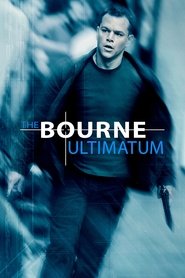
The famous shaky-cam is easy to notice; what's worth studying is why it works. Greengrass descends from The Battle of Algiers and Z — fiction staged to feel like caught footage — and the Waterloo Station sequence is the masterclass: three layers of watching stacked on top of each other (surveillance monitors, operatives in the crowd, a man who can hear but can't see), with no shot fired and total dread. The score drops out and earpiece chatter fills the gap. This is an action movie secretly about perception itself — the angle, the effort, the cost of looking.
Gone Baby Gone (2007)
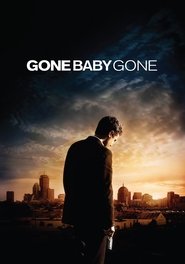
Affleck shoots his native Boston with wide-angle lenses at close range, so characters are pressed into their environments rather than isolated from them — Dorchester is never viewed from a comfortable distance that would prettify it. Watch the film's patience: interrogations that refuse to cut short, informants worked in actual neighborhood bars, each scene a small disclosure of what the world was hiding. And watch how a straightforward missing-child case slowly becomes a question the film refuses to answer for you: whether following the rules produces justice, and what we owe the vulnerable when institutions fail them.
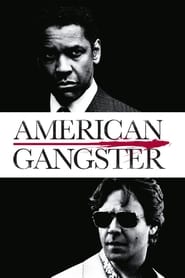
American Gangster (2007)
Read the whole film through the wardrobe. Frank Lucas dresses in grey, mid-priced suits — the uniform of a man whose business depends on invisibility — until a chinchilla coat changes everything. Harris Savides builds the visual world on that same opposition: amber warmth and fur-coat luxury on one side, institutional grey and street-cold on the other. Watch how Scott, a British outsider fluent in American mythology, treats the drug trade with the analytical language of business — branding, product quality, market share — and lets a posture, a table setting, a coat carry the moral argument that dialogue never states.
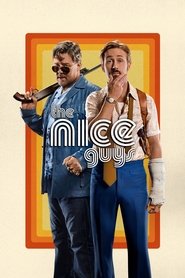
The Nice Guys (2016)
Shane Black takes the broken-detective tradition of The Long Goodbye and Chinatown and stages it as slapstick: Holland March perceives everything and can do absolutely nothing about it — his best leads arrive by accident, his gun goes off into the wrong room. Watch Philippe Rousselot's palette, all amber smog and blue swimming pools and garish 70s browns, lit by period neon and tungsten visible in the frame — a deliberate refusal of the cool steel-blue look of most modern thrillers. It's a comedy built on a genuinely bleak idea: that the conspiracy at the center is institutional, entrenched, and bigger than any gumshoe.
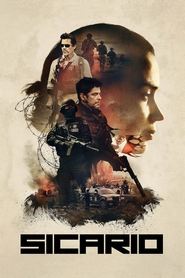
Sicario (2015)
Watch where Villeneuve puts Emily Blunt's Kate Macer: in doorways, in back seats, at the edges of briefings where the real decisions happen somewhere she is not. The blocking is the argument — she's the person things happen near. Roger Deakins shoots the border landscape geologically, vast frames that dwarf human figures without romanticizing the space, borrowing the Western's scale while refusing its myth. This is a thriller that keeps converting action into something you can only watch, a competent investigator systematically denied the ability to act — dread built not from what happens but from what's withheld.
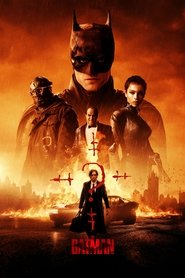
The Batman (2022)
Greig Fraser lights this film like Gordon Willis lit The Godfather — radically underexposed, faces top-lit with eyes lost in shadow, light coming only from sources you can see: sodium lamps, neon, rain-smeared practicals. Watch how the first thing the film establishes is that everyone in Gotham is being watched, and that the watching is the plot. The Riddler stages crime scenes as puzzles addressed directly to the detective — a structure borrowed from Zodiac and Se7en — so that Batman decodes and you decode over his shoulder. It's a superhero film built on procedural patience rather than spectacle, and the difference is visible in every frame.
Watched together, these films form a fifty-year conversation about the same question: what happens when looking hard at the world is no longer enough to change it? You'll see the surveillance telephoto of The French Connection echo in Bourne's CCTV nightmare and Gotham's rain-streaked windows; you'll see Altman's baffled Marlowe reborn as Shane Black's pratfalling gumshoe; you'll see the cold procedural dread of The Parallax View and Missing resurface at the Mexican border. Each film teaches you how to watch the next one. And the great pleasure of the set is that these are all thrillers made by filmmakers who trust you — who won't cut to the explanatory line, who let you stand on the cold side of the glass and figure out for yourself what you're seeing. Bring your patience. It pays.