Sightlines · a mini film course
The Camera and the Cop: Crime Films Where Watching Is the Whole Game
Every film in this set is, on paper, a crime picture — cops, gangsters, heists, drug deals, the whole nocturnal machinery. But watch them together and something subtler emerges: these are all films about looking. About surveillance, obsession, and the strange gap between seeing something clearly and being able to do anything about it. In some of these films, competence is a superpower — a character reads the world and acts, and the world answers. In others, the ground shifts: the hero watches, waits, stands in doorways while decisions get made somewhere else. The camera itself takes sides in this fight. Sometimes it chases; more often, in these films, it watches — patient, curious, occasionally cruel. That's the through-line: eleven crime films that turn the act of watching into drama, and quietly ask whether all that watching adds up to anything.
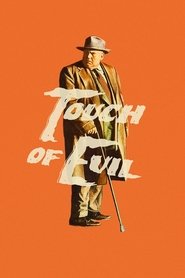
Touch of Evil (1958)
The film opens with one of the most famous shots in cinema: a bomb goes into a car trunk, and the camera lifts off the ground and follows it — over rooftops, through traffic and neon and street music — for three unbroken minutes, no cut. Notice how Welles builds scenes not by cutting back and forth but by letting actors move toward and away from a wide-angle lens, so proximity itself does the dramatic work. Watch for the low angles that press ceilings down on Hank Quinlan's head, making the man look like the weight of his own reputation. This is late noir pushed to gorgeous excess, and every distortion in the image is telling you something true.
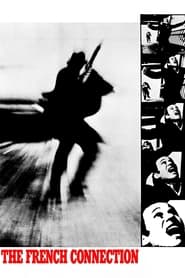
The French Connection (1971)
Winter in New York, shot like a documentary someone risked frostbite to make: greys, browns, sickly fluorescent greens. Watch the surveillance sequences, where a telephoto lens flattens the city into a haystack and asks you to find the needle alongside the cops. And notice one wordless image early on — a detective on a freezing sidewalk eating cold pizza while his elegant target enjoys a fine meal behind restaurant glass. Friedkin never explains it; he just makes you stand on the cold side of the window and feel the gulf between hunter and hunted.
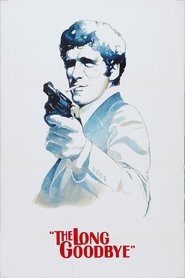
The Long Goodbye (1973)
Altman opens a murder mystery with a man trying to fool his cat with the wrong brand of cat food — and that shaggy errand is the whole film in miniature. The camera here never sits still: it drifts, zooms, repositions, like a curious bystander catching the margins of scenes rather than their centers. Watch how this restless observation quietly refuses to confirm that anything Marlowe learns actually matters. It's a detective picture where the detective still believes in loyalty and effort, moving through a Los Angeles that has stopped keeping score.
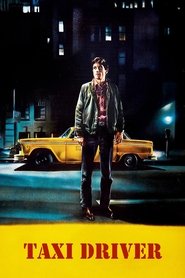
Taxi Driver (1976)
Almost everything this film knows, it knows from inside a cab: fogged windshields, neon smeared across wet glass, a pair of eyes in the rearview judging the city. Chapman's camera rides so close to Travis's point of view that you catch his fever — then it steps outside, across a diner, up above, and lets you see him coldly. That push-pull between infection and judgment is the film's great trick. Watch how driving becomes the visual signature of a man who circulates endlessly through a city without ever truly connecting to it.
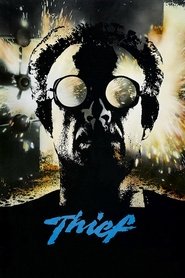
Thief (1981)
Mann shoots a safecracker the way you'd film a master craftsman: real tools, real heat, real duration, a fountain of sparks in the dark timed to a Tangerine Dream pulse. The streets are always wet so they return the light — neon and traffic signals smearing across asphalt in deep blacks and saturated color. Watch the long, near-wordless job sequences (descended from Rififi's famous silent heist) where suspense comes from skill and patience rather than confusion. The film's quiet irony: it spends two hours proving its hero is superb at his work, while asking whether being superb buys him anything at all.
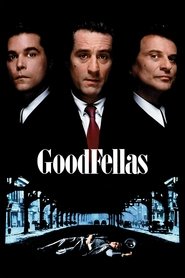
GoodFellas (1990)
Watch for the moment early on when the film freezes its own motion — a face arrested mid-thought — so a voice can take possession of the story. Scorsese borrows freely from the French New Wave (jump cuts, freeze-frames, a narrator who talks straight past the rules) and from a roving European camera style, most famously in a single unbroken shot that glides through the back entrance of the Copacabana nightclub. The whole film moves at the speed of seduction: notice how the style itself is designed to make this life look irresistible, and how implicated that makes you.
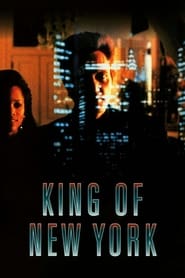
King of New York (1990)
Bazelli photographs New York as a city of perpetual night — cold blues, smeary neon, shadows that swallow faces — and at the center floats Christopher Walken's face, barely moving, giving almost nothing back. Watch how much of the performance is stillness: a gangster who watches, lets others fill the silence, and speaks barely above the hum of the room (a hushed minimalism descended from Le Samouraï). The tension the film builds lives entirely in that gap between a serene, mournful surface and what it's holding down.
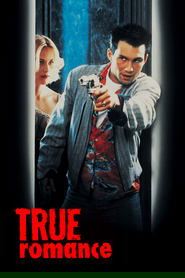
True Romance (1993)
Tony Scott shoots everything — including a conversation with an imaginary Elvis in a bathroom mirror — dead literal and lit like a perfume ad: bruised blues, molten ambers, color pushed toward abstraction. Watch how the hero's whole identity is assembled from pop culture — comic books, movie posters, kung-fu matinees — a direct descendant of Godard's Breathless kid who built himself out of Bogart posters. The film's daring is tonal: extreme tenderness and extreme violence in the same frame, and it asks you to believe both.
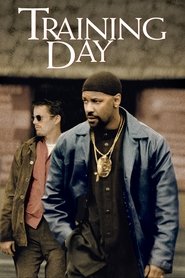
Training Day (2001)
One day, one city, and most of it inside or beside a tinted Monte Carlo with Denzel Washington at the wheel. Watch the framing: the rookie sits where he's put, and the car becomes a trap he can't exit — not the vehicle, the frame. Fuqua shoots Los Angeles's actual racial geography — real neighborhoods, real territorial lines — with a handheld, documentary-textured camera that makes the confrontations physically uneasy. This is the corrupt-cop picture run as a clean, muscular machine: pressure building on one man across a single day until something has to give.
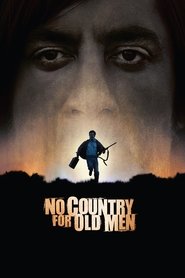
No Country for Old Men (2007)
Deakins shoots the Texas desert as a participant, not a backdrop: long lenses compress tiny human figures against featureless space, emphasizing exposure and distance. Watch — and listen — for the film's restraint: almost no score, so that a rustle, a hum, a fluorescent buzz carries the tension. The gas-station coin-toss scene is the masterclass: nothing moves but the talk and the light, and the dread has nowhere to go. Notice how the film honors every mechanic of the chase thriller while quietly declining its usual comforts.
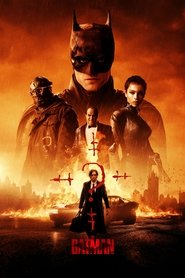
The Batman (2022)
The first lesson Reeves teaches: everyone in Gotham is being watched, and the watching is the plot. Fraser underlights the film far beyond blockbuster norms — faces falling into shadow, in the tradition of Gordon Willis's radically dark Godfather photography — with sodium orange and blood red cutting the murk. Watch how it plays as a detective story rather than an action picture: a killer who leaves ciphers addressed to the detective, so that you decode the crime scenes over Batman's shoulder, made a partner in the investigation.
Watched together, these films become a conversation across seventy years about what a crime story is for. You'll see techniques get handed down like tools: Friedkin's freezing handheld streets resurface in Fuqua's Los Angeles; the hushed, watchful hitman of French cinema echoes in both Walken's gangster and the Coens' desert; the dark-faces-and-practical-light look travels from The Godfather's lineage into Gotham. But you'll also feel a deeper argument running underneath — between films where a capable person acts and the world answers, and films where the world has grown too big, too networked, too indifferent to answer anyone. Pay attention to who gets to act in each film, who only gets to watch, and where the camera plants you between them. That's where these movies keep their secrets — not in their plots, but in their looking.