Sightlines · a mini film course
Watching Men Watch: A Course in the Cinema of Surveillance and Obsession
Every film in this set is, at heart, about a man who looks. A detective on a stakeout, a vigilante at a diner window, an undercover agent studying the room he's pretending to belong to, a killer watching the street through round black glasses. These twelve films span seventy years — from the dying gasp of classic noir to the modern blockbuster — but they share one conviction: the most dramatic thing a camera can film is a person perceiving. Sometimes the looking leads to action. Sometimes it curdles into obsession. Sometimes the film simply refuses to let its hero act at all, and stillness becomes the whole story. Watch these together and you'll start to see how directors use light, lenses, and patience to turn watching into drama — and how the crime film became American cinema's favorite lab for asking whether seeing the truth actually changes anything.
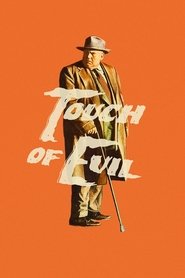
Touch of Evil (1958)
Start with the famous opening: a single unbroken camera move, over three minutes long, that lifts off the ground and threads through a border town's traffic and neon, binding a ticking car and a strolling couple into one continuous breath. Then notice the opposite image — Orson Welles shot from floor level, wide-angle lenses distorting him into a monster, ceilings pressing down. The whole film lives between those two registers: a camera that flows and connects, and a man who forges and corrupts. This is classic noir pushed to its outer limit, every element — the crooked cop, the night world, the moral rot of authority — turned up until the genre itself seems to be sweating.
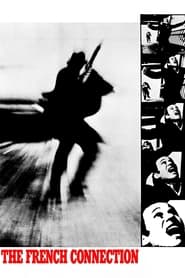
The French Connection (1971)
Feel the cold. Owen Roizman shoots New York in winter greys, browns, and sickly fluorescent greens, often with long telephoto lenses that make surveillance feel like eavesdropping from across the street. Watch for the scene where Doyle stands on a freezing sidewalk eating cold pizza while, through restaurant glass, the elegant Frenchman he's hunting enjoys wine at a white tablecloth — no dialogue explains it; the film just makes you stand on the cold side of the glass. This is a procedural built from threads: a tail, a frisk, a wiretap, each one lighting up an inch more of a hidden network. And notice that obsession here isn't heroism — it's pathology, and it costs.

Chinatown (1974)
Noir traditionally hides its crimes in shadow; John Alonzo's cinematography inverts that, bathing everything in amber California sun where daylight offers no clarity at all. Watch Jack Nicholson spend half the film with a white bandage across his nose — a detective who literally can't follow his own nose, maimed on screen by Polanski himself in a cameo. And watch how each procedural discovery, staged with immaculate quiet craft, seems to make things worse rather than better. The film uses the detective's toolkit against the detective.
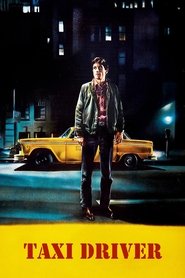
Taxi Driver (1976)
Almost everything this film knows, it knows from inside a cab: fogged windshields, neon smeared on wet glass, pedestrians caught and lost in headlights. Michael Chapman's camera rides close enough to Travis's point of view to infect you with it, then steps back — across a diner, down from above — just far enough to let you judge what you've been sharing. Notice how much of the film is a man driving, circulating, perceiving everything and changing nothing. Paul Schrader built the script from Bresson's diary-voiceover structure and the obsessive rescue mission of The Searchers — then hollowed out the engine.
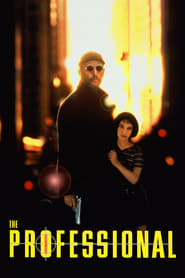
Léon: The Professional (1994)
Before anyone is killed on screen, watch Léon tend things — the glass of milk, the sit-ups in the dark, the potted plant he calls his only friend because "it has no roots, like me." Besson inherits the grammar of Melville's disciplined, code-bound assassins (Le Samouraï, Le Cercle Rouge), then keeps switching the current off: between jobs, Jean Reno becomes pure face, a still surface holding one steady note of arrested, monkish innocence. Thierry Arbogast lights the interior refuges in warm ambers and golds against cooler institutional spaces — watch how the palette tells you where safety lives.
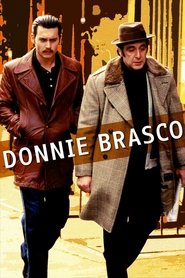
Donnie Brasco (1997)
Watch Johnny Depp's face in the long-held close-ups: he's always slightly behind his eyes, laughing on cue while a fraction of him watches the room and watches himself work it. This is a film about a man whose job is performance under mortal stakes — and about what happens to the self underneath. Peter Sova shoots New York in autumn greys and washed-out amber, refusing all gangster glamour, and the camera mostly just watches, in the tradition of Lumet's Serpico and Prince of the City. Where Goodfellas demythologized the mob through irony, this one does it through intimacy.
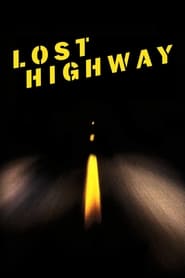
Lost Highway (1997)
Peter Deming photographs the Madison house as near-abstract darkness — rooms defined by what you can't see, characters walking into blackness and dematerializing — set against bleached, sun-struck exteriors. Lynch takes every piece of noir furniture (the femme fatale, the gangster, the surveillance, doomed Los Angeles) and removes the explanations that usually hold them together. Watch for doubling: one actress, two women, and a film that refuses the cut that would tell you whether they're the same person. Don't fight the loop; the disorientation is the design, in the lineage of Persona and Last Year at Marienbad.
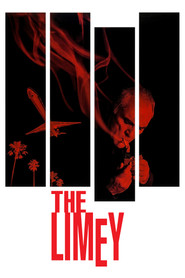
The Limey (1999)
There's a face in this film that doesn't belong to it: young Terence Stamp, grainy and golden, lifted whole from a 1967 Ken Loach film and dropped in as the older Wilson's remembered past. Soderbergh never labels it a flashback — the past just surfaces, undated, the way memory actually interrupts. Ed Lachman shoots Los Angeles in bleached, observational clarity while the editing fractures it, so that a revenge plot becomes a portrait of grief that can't stop returning to what's lost. The structural model is Point Blank; the emotional model is a father reckoning too late.
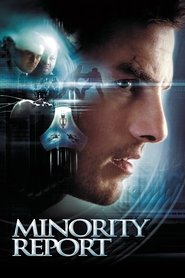
Minority Report (2002)
The film's truest image is a strange one for a thriller: a man before a wall of glass, gloved hands raised, conducting fragments of a crime that hasn't happened yet — watching, sorting, reading, unable to act. Janusz Kamiński overexposed the film and drained its color through a silver-retention process, giving the future the cold, steely texture of an old newspaper photograph. Watch how Spielberg fuses the detective film with science fiction: detection becomes an act of interpretation, piecing together fragmented, out-of-order glimpses, with the innocent-accused suspense engine of Hitchcock's The Wrong Man running underneath.
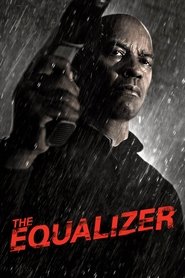
The Equalizer (2014)
For most of an hour, this is a film about ritual: the same diner, the same table, the napkin folded into a clean rectangle, the tea steeped an exact number of minutes. Antoine Fuqua and Denzel Washington have the nerve to keep the action switch off, and the patience pays: the camera keeps finding McCall behind glass, framed in windows, isolated in reflections — a man studying a world he won't step into. The lineage is Melville's Le Samouraï — the solitary professional's monastic routine — grafted onto an American thriller. Watch how much stillness can carry before anything erupts.
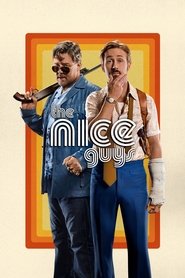
The Nice Guys (2016)
Here the detective's engine seizes up — and it's played for comedy. Holland March perceives everything and can do nothing about it: he doesn't deduce, he flails; the best lead arrives by accident; the gun goes off into the wrong room. Philippe Rousselot shoots 1970s Los Angeles in saturated amber smog and deep blue pool-light, with period neon and tungsten visible in the frame — a deliberate rejection of modern steel-blue thriller grammar. Shane Black is riffing lovingly on The Long Goodbye and Chinatown: institutional conspiracies too big to beat, met with two men who can barely tie their shoes.
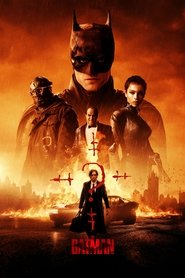
The Batman (2022)
The first thing Matt Reeves teaches you is that everyone in Gotham is being watched, and the watching is the plot. Greig Fraser underlights the film radically by blockbuster standards — near-monochrome darkness punctured by sodium orange and blood red, faces falling into shadow — a direct inheritance from Gordon Willis's work on The Godfather. Watch how the film borrows the grammar of the serial-killer procedural (Zodiac, Se7en) rather than the action spectacle: a killer who leaves ciphers addressed to the detective, and an audience decoding right over the hero's shoulder.
Why watch them together? Because in sequence, these films teach you to see the crime picture's secret history: a genre that started as a machine — see the clue, act on it, close the case — and spent seventy years learning to break its own machinery in fascinating ways. Welles bends the machine toward excess; Friedkin and Polanski expose its costs; Scorsese hollows it out; Lynch and Soderbergh shatter its sense of time; Black turns its failure into farce; Reeves and Fuqua rebuild it around the act of watching itself. You'll start noticing where each film puts its glass — windshields, restaurant windows, surveillance screens, diner panes — and who's standing on the cold side of it. That's the through-line: the camera that watches rather than chases, and the men inside the frame who can't stop looking, whatever it costs them.