Sightlines · a mini film course
The Watchers: Eleven Films About Looking, Listening, and What You Can't Prove
Every film on this list is powered by the same anxious engine: someone watching. A cop across a frozen street. A microphone aimed over a creek. Two reporters working phones in a fluorescent newsroom. A retired man reading the room over the rim of his teacup. These are paranoid films — films about hidden networks, official lies, and the terrible gap between what a person knows and what they can prove — and each one solves the problem of paranoia through craft: where the camera stands, how long a shot holds, what the light withholds. Watch them in order and you'll see the thriller learn, decade by decade, that the most gripping thing on screen isn't the chase. It's attention.
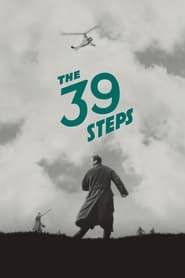
The 39 Steps (1935)
This is the machine at its purest and fastest: an innocent man swallowed by a conspiracy, and a film that refuses to slow down for even a scream. Watch the famous cut where a landlady's shriek becomes a train whistle — horror instantly converted into motion. Notice, too, how Hitchcock uses shadow, fog, and torchlight to make the spy ring feel everywhere and nowhere, a pressure you sense but never see whole.
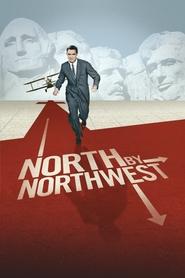
North by Northwest (1959)
Hitchcock's great trick here is giving you more knowledge than the man on screen — you hold the web of connections while poor Roger Thornhill blunders through it, and your knowledge is the suspense. Watch how the visual register shifts: cramped Manhattan interiors, the stiff formality of the UN, and then the terrifying openness of the prairie, where a man in a gray suit stands exposed against a horizon with nothing on it. Danger, the film argues, doesn't need darkness. It needs space.
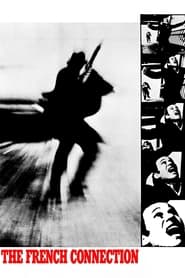
The French Connection (1971)
Shot in winter grays and browns under dim fluorescents, with telephoto lenses that flatten the street into surveillance footage, this film brings the grain of documentary into the cop thriller. Watch the sequence where the detective stands in the cold with bad coffee while his quarry dines behind restaurant glass — no dialogue explains it; Friedkin just lets you stand on the cold side of the window and feel the gulf. The film treats obsession not as heroism but as something closer to sickness, and every scrappy, freezing frame supports the diagnosis.

The Conversation (1974)
It opens with a long lens high above a crowded square, picking a couple out of the noise — and before anything is explained, you've already become a spy. Coppola's subject is a surveillance expert who has made detachment into a philosophy, and the film keeps framing him behind frosted glass and at the edges of rooms, a man who observes everything and touches nothing. Listen as hard as he does and ask yourself what the listening costs.

Chinatown (1974)
Notice the light: amber, dusty, midday-harsh — a detective film where crimes happen in full sun and daylight brings no clarity. Watch the private-eye machinery run at maximum craft (a tail, a photograph, water running where it shouldn't) and notice the film's sly joke: its hero spends half the picture with a bandage across his nose, a detective who literally can't follow his own nose. Every clue he uncovers seems to tighten something rather than loosen it.
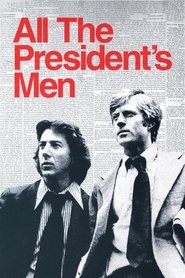
All the President's Men (1976)
Gordon Willis — "the Prince of Darkness" — shoots the newsroom in merciless greenish fluorescence and the parking garage in pools of black where faces refuse to arrive. The film is built almost entirely of approach and refusal: phone calls that go nowhere, doors that open a crack and close. That's not slack pacing; it's the film's argument about what knowing actually costs, told through two reporters who never confront power directly — they just keep asking one more question.
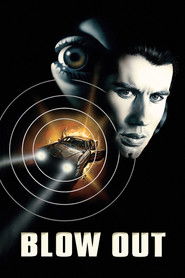
Blow Out (1981)
De Palma opens with a deliberate joke — a prowling camera revealed as footage from a cheap slasher movie — announcing that this is a film about filmmaking itself. Then a sound man, taping wind and crickets, records something his trained ear can't explain away, and the whole picture lives in the gap between what he heard and what he can prove. Watch how the film asks you to assemble the evidence alongside him, sound laid against image, and feel the dread of a system built to keep them apart.
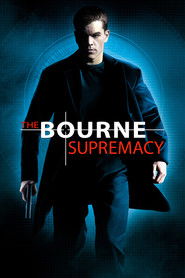
The Bourne Supremacy (2004)
Here the handheld camera stops being a flourish and becomes a thesis: the frame chases the action rather than composing it, long lenses smearing crowds into colored static around one alert face. Watch the early market scene — the hero isn't doing anything yet, just reading exits and sightlines, and the jittery camera makes you scan the way he scans. You're never given a calm, god's-eye view, because he never gets one either.
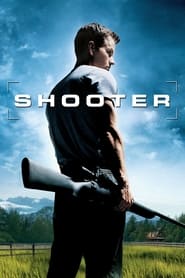
Shooter (2007)
Watch the very first kill: the bullet lands before you hear the shot, the crack rolling in a beat later across the valley. That small ballistic truth is the whole film in miniature — perception and action separated by a measurable gap, then closed by a competent body. Fuqua contrasts clean Montana light with the sickly institutional interiors of government power, an Eden-versus-bureaucracy scheme that carries the film's post-Iraq disillusionment in its color palette.
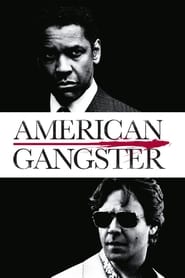
American Gangster (2007)
Read this one through the wardrobe: a drug lord dresses in gray, mid-priced suits because invisibility is his first business principle — and then a chinchilla coat, worn once to a prizefight, changes everything. Scott and cinematographer Harris Savides build the film on a chromatic war: the amber warmth of self-made wealth against the institutional gray of the cop pursuing it. Notice how the camera keeps finding the watchers before their target knows he's been seen.
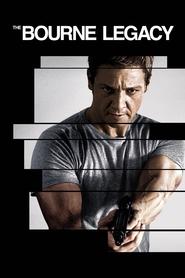
The Bourne Legacy (2012)
Gilroy inherits the franchise's shaky-cam legacy and quietly refuses it: Robert Elswit shoots with depth, stability, and readable geography, so you can actually follow the action through the Manila rooftops. Watch the Alaskan opening — a supremely capable body crossing ice and rock — and then watch that body check a vial of rationed pills. The most legible action hero the series ever had is also the most dependent, and that tension is the film's real subject.
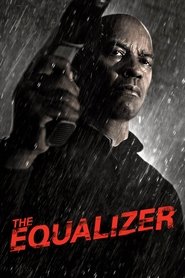
The Equalizer (2014)
For most of an hour, this is a film about stillness: the same diner every night, the napkin folded, the book squared to the table's edge, the tea steeped exactly. Fuqua's camera holds in static, slowly drifting compositions, constantly finding its man behind glass and in reflections — watching a street he won't step into. Coming from the lineage of the solitary professional's ritual routine, the film bets that a patient first act makes everything after it land harder. Hold onto the stillness; it's the whole argument.
Watched together, these films become a conversation across eighty years about a single question: what happens when seeing isn't enough? Hitchcock's runners convert every danger into motion; the 1970s films slow down and let their watchers freeze, listen, and doubt; the modern thrillers inherit both instincts and argue between them — jittery immersion versus patient, legible stillness. You'll start noticing the shared vocabulary: telephoto lenses that turn streets into evidence, light used as moral weather, glass everywhere — windows, reflections, frosted panes — separating the ones who know from the ones who can act. By the end, you won't just be watching these films. You'll be watching the way they watch.