Sightlines · a mini film course
Painted Time: A Course in the Cinema That Watches
Every film on this list has been called "beautiful" or "painterly," but that's not really what binds them. What binds them is a shared wager: that the most powerful thing a camera can do is watch — hold a face, a room, a ritual, a gorgeous doomed world — rather than chase a plot. In these films, looking is the drama. Characters study each other across ballrooms and sitting rooms; heroes see everything and find they can do almost nothing; time is allowed to stretch until you feel it on your skin. Some of these worlds gleam while they rot; some frames become traps; in a few, appetite replaces reason entirely. Watch them as one long conversation about the act of seeing, and each one will sharpen the next.
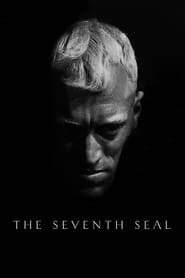
The Seventh Seal (1957)
A knight returns from the Crusades to a plague-stricken land and sits down to play chess with Death on a grey beach — one of cinema's great opening images. Watch Gunnar Fischer's severe black-and-white: faces set against blown-out white skies, figures swallowed by shadow, a visual grammar inherited from silent-era masters like Dreyer and Murnau. And notice the stillness at the film's heart: a man who perceives everything around him — plague, fanatics, a silent heaven — and keeps searching for a single gesture that will count. That searching gaze, with the action stalled behind it, is where so much of modern cinema begins.
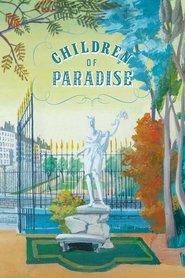
Children of Paradise (1945)
Made under the Nazi Occupation, this is French studio filmmaking at its absolute peak — a teeming, lamp-lit 19th-century Paris built from scratch, its crowded Boulevard du Temple alive like a single organism. Watch Jean-Louis Barrault's mime, Baptiste: a trained body that can say more with a hung head and a held posture than the brilliant talkers around him can with speech. The film deliberately sets his silence against an actor's spoken bravura — two whole ways of performing a life — and asks which one gets closer to feeling.
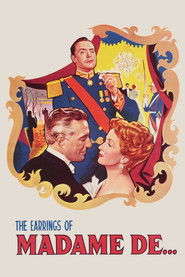
The Earrings of Madame de... (1953)
A pair of earrings changes hands, and a small social lie sets an entire world spinning. Ophüls's camera is in nearly perpetual, gliding motion — through doorways, around corners, through waltzing crowds — and the movement isn't decoration: it models the closed, mirror-lined society these people can't step outside of. Watch the very first minutes: we meet Louise not as a face but as a reflection, a woman appraising the surface she has been taught to be. The film's whole tragedy is stated in that mirror.
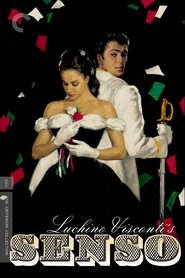
Senso (1954)
Visconti opens inside a Venice opera house mid-performance, as patriotic leaflets rain down on Austrian uniforms — a single shot announcing that history here will be staged and sung before it is lived. This is the film where Italian neorealism visibly mutates into something operatic: Technicolor tuned to 19th-century painting, candlelit interiors shot with the deep chiaroscuro Robert Krasker carried over from The Third Man. Watch how everything exquisite in the frame — the reds and golds, the antique rooms — belongs to a world that is dying even as it gleams.
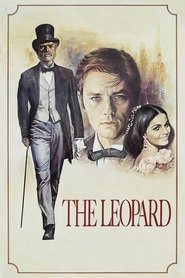
The Leopard (1963)
Visconti again, and the grandest version of the same idea: a Sicilian prince who understands his class's demise more completely than anyone else, and responds by lifting not one finger. Giuseppe Rotunno's cinematography is organized around 19th-century Italian painting, and the famous ball sequence — with a mobile camera threading through dancers in the manner of Ophüls — is one of cinema's supreme set pieces. Watch for the moment Don Fabrizio pauses before a mirror: perception at its most complete, action at its most withheld, a whole film in one look.
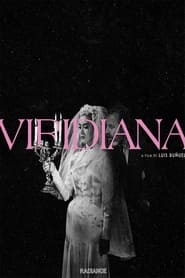
Viridiana (1962)
Buñuel's method is deceptive plainness: José Aguayo's clean, deep-focused black-and-white photographs the strangest things transparently, so their strangeness becomes undeniable. A devout young woman attempts to redeem the poor through personal charity, and Buñuel sets her sincerity against raw human appetite without a single editorializing camera flourish. Watch the objects — a skipping rope, a trunk of shoes — that travel through the film accumulating meaning while the camera pretends not to notice. Here people aren't reasoning agents; they're gripped by drives, and the film observes them with a documentarian's cool.
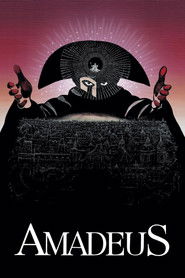
Amadeus (1984)
The frame is the film: an aged Salieri, confessing in an asylum, summons the past not as accurate memory but as evidence — a case being built against heaven itself. Watch the scene where he reads Mozart's manuscripts and hears them, the music swelling as if the paper were singing: everything you see is filtered through this envious, brilliant, unreliable listener. Miroslav Ondříček's candlelit photography is warm where Barry Lyndon is chilly, and the giggling, earthy Mozart carries the irreverence Forman brought from the Czech New Wave into costume drama.
The Cook, the Thief, His Wife & Her Lover (1989)
Greenaway builds the whole film from one repeated move: Sacha Vierny's patient lateral tracking shot — the same glide he once sent through Last Year at Marienbad — sliding between rooms color-coded so boldly that clothes change hue at each threshold, with no cut you can point to. Watch the restaurant as a horizontal stage, a nightly procession from kitchen to dining room, and watch Gambon's thief as pure appetite given a mouth. It's a savage political allegory dressed as haute cuisine, and its subject is consumption in every sense.

Salò, or the 120 Days of Sodom (1976)
Approach with care: this is the most demanding film here, Pasolini's reckoning with fascism structured on Dante's descent through circles. What makes it bearable to think about is precisely its form — Tonino Delli Colli's cool, even, deliberately undramatic light; measured wide shots that hold power and its victims in the same rationalist frame, like an official document. Watch how the film refuses close-up sensation and instead keeps showing you the watchers: civilized connoisseurs arranging their distance from what they cause. It is a horror film about spectatorship itself.
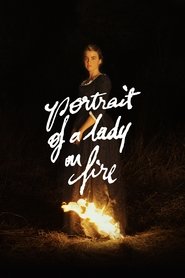
Portrait of a Lady on Fire (2019)
Sciamma's masterstroke is making the act of looking the event, not the means to one. A painter must study a woman in secret; the camera frames people in the act of watching each other, and shots are held long enough that you feel yourself seeing — and feel yourself being seen back. Watch how the gaze stops being one-way authority and becomes a circuit running in both directions: the model studying the painter as intently as the painter studies her. Behind it stand Akerman's patient long takes and Dreyer's faith that a held face can carry a whole film.
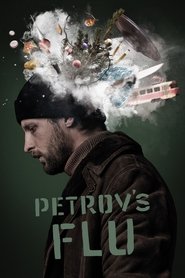
Petrov's Flu (2021)
A fever is the film's engine: illness as the lowered, porous state where the walls between sanity and delusion, past and present, simply give way. Watch Opelyants's astonishing long takes, which glide from a crowded bus into fantasy and back without a cut, threading doorways and decades as if reality had no seams. The hero is carried through most of it — slung over a friend's shoulder, sweating, watching — a man reduced to pure looking while the world dances around him. Its lineage runs straight from Tarkovsky's Mirror: memory, dream, and present dissolved into one subjective current.
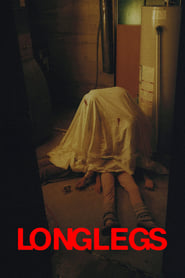
Longlegs (2024)
Watch where they put him. Perkins's killer almost never sits in the center of the shot — he hangs at the edges, cut off, slightly soft — and your eye goes hunting through the frame before your mind admits it's afraid. Andrés Arochi's compositions are wide, symmetrical, drained to institutional grey, with vast empty zones you're left to scan; the dread comes from never being sure where, exactly, the bad thing is. It's the Silence of the Lambs template rebuilt as a question about offscreen space — proof that this list's oldest lesson, that the frame itself can be a trap, is alive in 2024.
Watched together, these twelve films teach a single skill: patience with the image. You'll start noticing how a held shot changes what a face means; how a moving camera can be a cage as easily as a liberation; how the most beautiful frames often belong to worlds in decay, and how directors from Bergman to Perkins use emptiness, stillness, and the edge of the frame to make you an active, anxious, implicated watcher. The lineages here are real and traceable — Ophüls's ballroom camera flows into Visconti's, Vierny carries Resnais into Greenaway, Dreyer's faces echo in Sciamma's — so each film literally teaches you to see the others. Take them slowly, in any order, and let time stretch. That's what they were built for.