Sightlines · a mini film course
The Cinema of Watching: Twelve Films Where the Camera Refuses to Chase
Most movies are engines. A character sees a problem, does something about it, and the world answers back — the editing hurries you along that chain from cause to effect. The films on this list run on a different fuel. Here, characters look at their worlds with total clarity and find no deed available that would fix anything. The camera doesn't chase; it watches. Time is allowed to stretch. Space becomes a trap, a mirage, a ledger. What emerges isn't boredom — it's a different kind of suspense, where the drama is in the held shot itself, in what accumulates when nobody cuts away. Watch these together and you'll start to feel how stillness can be as gripping as any chase.
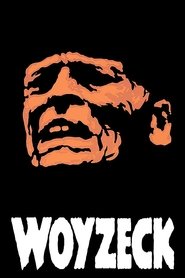
Woyzeck (1979)
Watch how Herzog and cinematographer Schmidt-Reitwein refuse to rescue Klaus Kinski from his surroundings: wide and medium shots keep his small, twitching figure dwarfed by the geometry of a baroque town built for civic authority and display. Nothing in the frame is on his side. Notice the flat, even, almost clinical light — degradation filmed not as horror but as a ledger entry, a transaction. Herzog owes something here to Lang's M, where architecture itself encodes the impossibility of escape, and to Bresson's parade of social cruelties in Au Hasard Balthazar, scenes played at full theatrical duration.
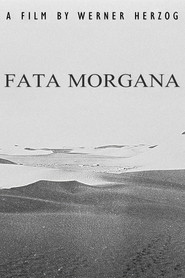
Fata Morgana (1972)
A film built on a beautiful contradiction: the mirage is real — the lens genuinely recorded it — and yet what it shows was never there. Herzog wagers eighty minutes on landscape alone, holding shots long past any narrative use, letting the desert complete its own action at its own pace (a method going back to Nanook of the North). Watch for the deadpan narration laid against surreal imagery, a trick inherited from Buñuel's Las Hurdes, and for editing that links images by association rather than cause and effect. You cannot walk into a mirage. You can only stand and let it disturb you.
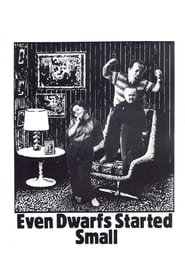
Even Dwarfs Started Small (1971)
Somewhere in this film, a driverless car circles a courtyard — motion completely unhooked from purpose — and its engine-drone becomes the floor under everything else. That orbit is the whole film in miniature. Thomas Mauch's camera holds at a slight remove, observational in temperament but surrealist in effect, watching with clinical patience as events accumulate and deteriorate without editorializing. Herzog learned from Rossellini how a location's sheer indifference can become the moral texture of a film; here the terrain itself seems to shrug.
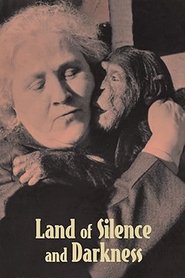
Land of Silence and Darkness (1971)
Begin with a hand laid flat against the glass of a fish tank, waiting for a faint pressure in the water. Herzog holds on this and explains nothing. Following the deaf-blind Fini Straubinger, the film asks what remains of a self when sight and hearing are removed — and finds the answer is a great deal: intelligence, warmth, humor, will. Watch how the camera holds in sustained, near-still positions during her encounters, adopting Wiseman's no-voiceover restraint while quietly building for us the same condition of pure attention his subjects live inside.
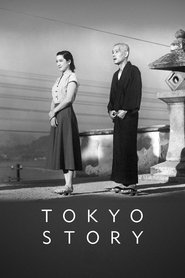
Tokyo Story (1953)
Smoke from chimneys. Laundry slack in still air. A train passes and the shot stays a few seconds past any use. Ozu punctuates his film with these empty images — and you'll remember them almost as much as the faces. Watch for the famous camera position, mounted low as if seated on a tatami mat, never naturalistically justified, simply held. This is mono no aware — the gentle ache of transience — enacted structurally: a still camera, melodrama withheld, a family situation that no confrontation could repair, so the people do the only thing left. They look. They wait. They endure.
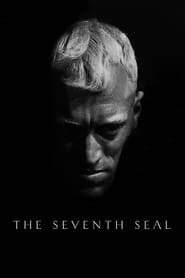
The Seventh Seal (1957)
A chessboard on a grey beach; a knight and a white-faced figure in black; pieces shift and nothing is decided. Hold onto that stillness — it's the key. Gunnar Fischer shoots with theological severity: faces against overexposed skies, deep shadow, a technique descended from Murnau's Faust and Dreyer's Passion of Joan of Arc, where the extreme close-up externalizes spiritual ordeal. Watch Max von Sydow's knight as a man of action who cannot find the deed — who perceives everything and can convert none of it into a gesture that counts. So he plays a game instead.
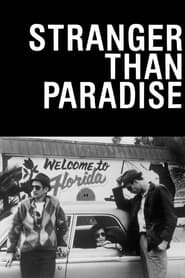
Stranger Than Paradise (1984)
Jarmusch's genuine invention: he found the paralysis funny. Each scene is a single fixed-frame take separated by hard cuts — Tom DiCillo's rigorously static camera watching three broke people fail to rise to occasions the film refuses to supply. Watch for the deadpan performance style borrowed straight from Bresson's Pickpocket, and for how the road movie gets emptied out: travel without liberation, Florida beaches under grey skies. Listen for Screamin' Jay Hawkins — the most excessive voice in America landing on the flattest possible surface.
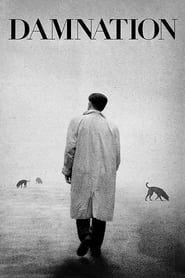
Damnation (1988)
The opening shot is one of the most celebrated in Béla Tarr's work: a slow lateral track along the buckets of an aerial coal-conveyor crawling across a ruined sky — mechanical, indifferent motion — before the camera reverses to discover a man at his window, watching the same buckets we were. That pivot is the whole film. Watch how rain functions as a near-cosmological principle, how everything — buildings, machines, bodies — seems to be returning to mud, and how Tarr converts the Hungarian long-take tradition of Jancsó from political choreography into existential drift.
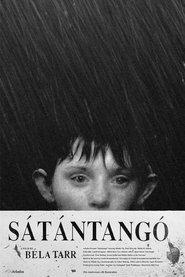
Satantango (1994)
Tarr's seven-hour monument opens on cows: several minutes tracking alongside a herd shuffling out of a collapsing farmyard, past damp-furred brick, into the grey. By the time the take releases you, it has taught you how to watch everything that follows — not for what happens, but for time itself moving through a ruined place. Individual shots run five, eight, ten minutes; the film shifts your experience from editing-rhythm to something like inhabiting duration, a method learned from Tarkovsky's Stalker. Don't fight it. The length is the meaning.
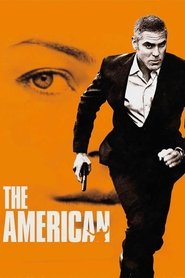
The American (2010)
Corbijn loves to film Clooney from behind — a small figure walking into a wedge of medieval street, stone walls converging like a vise. The town is beautiful; it is also a trap. Stop waiting for the chase: this is a thriller built almost entirely from ritual and watchfulness, in the lineage of Melville's Le Samouraï — character built from gesture and routine, long wordless sequences of a professional at his craft. The film even screens Once Upon a Time in the West within itself, tipping its hand: stillness before violence is the dramatic event.
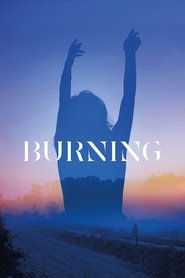
Burning (2018)
There's a well on a family farm, or there isn't — one witness says yes, another says no, and Lee Chang-dong never shows it to you. Watch how Hong Kyung-pyo's sustained compositions refuse to telegraph meaning, rendering the flat Paju farmland near the DMZ without picturesque softening. The organizing device — an absence that structures everything — is inherited from Antonioni's L'Avventura, and Yoo Ah-in's blocked, near-absent performance comes almost directly from Bresson's Pickpocket. The film's class argument is made through form, not dialogue: watch who gets to be visible, and who quietly isn't.
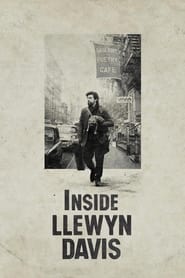
Inside Llewyn Davis (2013)
Watch the framing: Bruno Delbonnel keeps Llewyn at the edges of shots, caught between walls, wedged in doorways — spatially marginalized before a word is spoken. And watch the cat, which moves by no human logic and is the one creature in the film that simply persists. The Coens built this on the failure-biopic tradition and then withheld its usual consolations; the music, produced by T-Bone Burnett with live, unamplified vocals, is period-authentic and genuinely beautiful, which makes the film's forensic neutrality about its hero all the sharper.
Why watch these together? Because each film teaches you how to watch the next. Herzog's held desert shots prepare you for Tarr's cows; Ozu's empty rooms prepare you for Corbijn's converging streets; Bergman's frozen chessboard prepares you for Jarmusch's deadpan comedy of the same predicament. Across seventy years, four continents, documentary and fiction, tragedy and farce, these directors made the same wager: that if the camera stops chasing and simply watches — if space is allowed to press in and time is allowed to stretch — the viewer's own attention becomes the drama. You stop asking what happens next and start asking what am I seeing right now. That shift is the whole course. By the twelfth film, you won't be waiting for anything. You'll be looking.