Sightlines · a mini film course
Trigger Discipline: The Space Between Seeing and Doing
Every film on this list is a crime picture of some kind — hitmen, gangsters, cops, dealers — but what actually connects them is something quieter: each one is obsessed with the gap between watching and acting. Some of these films run on pure appetite, hurtling forward as if the characters were sliding downhill. Others hold their protagonists in strange, ritualized stillness — men who fold napkins, water plants, sit behind windows — and make you wait, and wait, for the moment the switch flips. A few go further and tamper with time itself, shuffling before and after until you can't trust the order of events. Watched together, they become a course in what movie violence is for, and what a camera does when it stops chasing the action and simply looks.
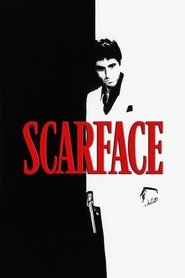
Scarface (1932)
Watch where the X falls. Hawks and his great cinematographer Lee Garmes seed a small cross — in rafters, in signage, in chalk marks — into the frame whenever death is near, a visual death-stamp you feel even if you never consciously spot it. Paul Muni plays Tony Camonte not as a man making decisions but as a creature in the grip of an appetite: he doesn't deliberate, he grabs. The hard pools of light against deep black anticipate film noir a full decade early.
Scarface (1983)
De Palma remakes Hawks beat for beat, but trades chiaroscuro for neon — John Alonzo's saturated pinks and blues, and the cold white-on-white of acquired wealth. Notice how the film builds two worlds at once: the glossy visible one of nightclubs and mansions, and underneath it a rawer zone of pure hunger that keeps breaking through the surface. Tony Montana wants "everything," and the film takes that literally — this isn't a story about ambition so much as an appetite that mistook itself for a person.
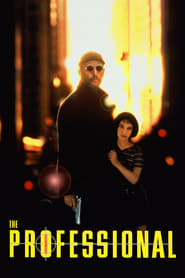
Léon: The Professional (1994)
A hit man drinks milk, does sit-ups in the dark, and tends a houseplant he calls his only friend "because it has no roots — like me." Before Besson shows you what Léon does, he shows you what Léon tends, and the whole film lives in that gap. Thierry Arbogast's cinematography splits the world into warm ambers for the refuges and cooler light for the institutional and violent spaces — watch how the palette tells you where safety lives. Jean Reno's near-wordless stillness descends straight from Melville's Le Samouraï: the professional defined by ritual, not speech.
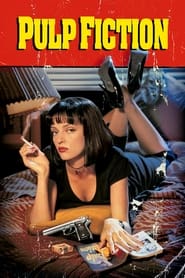
Pulp Fiction (1994)
The famous thing here is the shuffled timeline — chapters deliberately out of order, so "earlier" and "later" become rooms you can enter in any sequence rather than links in a chain. But notice the quieter choice underneath: Andrzej Sekula's long, patient takes and static frames, which let conversations about hamburgers and foot massages breathe at full length right beside mortal violence. The film insists on holding the mundane and the lethal in the same shot, and the shuffled structure means you're always feeling time itself rather than just following a plot.
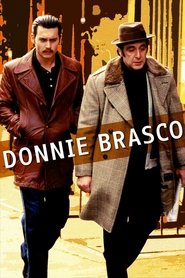
Donnie Brasco (1997)
Watch Johnny Depp's face in the long-held close-ups: he's always slightly behind his eyes, laughing on cue while a fraction of him watches himself work the room. This is a film about a man who sees everything and can act on almost nothing — every possible move would betray one of his two selves — so the drama becomes pure endurance. Peter Sova lights New York in grays, browns, and washed-out amber, like a city in permanent late autumn, and the camera rarely performs; it just watches a man whose whole job is watching.
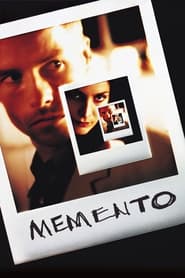
Memento (2000)
The opening image is a Polaroid fading — footage run in reverse — and it's the whole film in three seconds. The color scenes run backward, each ending where the previous one began, so every scene drops you in with no memory of how you arrived; a second black-and-white strand runs forward until they meet. Nolan's real invention is that the structure doesn't describe the protagonist's condition — it inflicts it on you. Wally Pfister's photography stays deliberately clean and legible, a wise mercy given how hard your brain is already working.
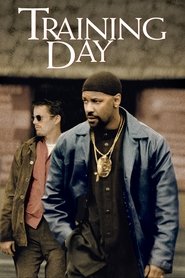
Training Day (2001)
Almost everything happens inside or just outside a tinted Monte Carlo, with Denzel Washington at the wheel and Ethan Hawke sitting where he's put — and the first thing to feel is that Hawke can't get out of the frame. Fuqua and Mauro Fiore shoot the confrontations handheld, documentary-close, and the film compresses everything into a single day, one situation tightening around one man until it squeezes a decision out of him. Notice too how seriously it maps Los Angeles — real neighborhoods, real territorial lines, never a neutral backdrop.
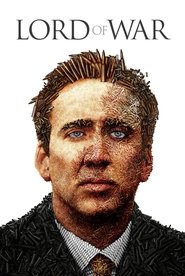
Lord of War (2005)
The film opens by following a single bullet — stamped, boxed, shipped, smuggled, loaded, fired — in one unbroken journey, a camera that belongs to no human eye at all, just the merchandise looking out of its own brass. That two-minute shot is the film's whole thesis filed before the narrator opens his mouth. And when he does, notice the salesman's charm of the voiceover: a man narrating his own rise so winningly that your enjoyment becomes part of the argument about complicity.
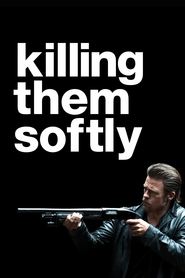
Killing Them Softly (2012)
Dominik takes the gangster picture and works by subtraction: no glamour, no romance, just weary tradesmen trapped in cramped two-shots across tables, complaining about pay. Then, once, he does the opposite — a killing rendered in slow motion, rain, and a pop standard, so exquisitely beautiful it's meant to make you a little sick. Watch how the film quotes the operatic movie-violence tradition precisely so you feel the strangeness of being moved by it. Greig Fraser's bilious, desaturated photography would carry him toward Dune and The Batman.
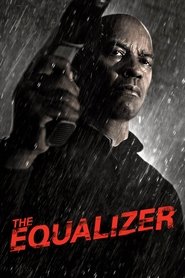
The Equalizer (2014)
For most of an hour, this is a film about a man and his rituals: the same diner, the folded napkin, the book squared to the table's edge, the tea steeped an exact number of minutes. Fiore's camera holds Washington in static or slowly drifting frames, constantly finding him behind glass and in reflections — a man reading the world without stepping into it. The whole design is a refusal: the film withholds the ordinary thriller engine for as long as it dares, and that patience is the point.
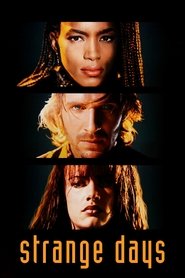
Strange Days (1995)
You don't watch the opening — you wear it: a robbery experienced entirely through someone else's eyes, shot on custom first-person rigs years before GoPro or bodycams made that kind of vision ordinary. Bigelow maintains two distinct ways of looking — the grimy, neon-soaked nocturnal Los Angeles of the story, and the immersive playback of recorded experience — and the tension between them is the film's real subject. Notice how it keeps asking what it costs to relive sensation secondhand, and what watching makes you complicit in.
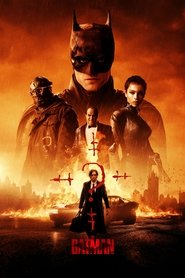
The Batman (2022)
The first lesson Reeves teaches is that everyone in Gotham is being watched, and that the watching is the plot. Greig Fraser lights the film radically darker than blockbuster norms — faces falling into shadow, light coming only from visible sources, a grammar borrowed from Gordon Willis's work on The Godfather. Because the killer addresses his clues directly to the detective, you end up decoding over Batman's shoulder: the film installs you as a third player in the correspondence, which is why it feels more like a rain-soaked procedural than a superhero picture.
Watch these together and a hidden conversation emerges. The two Scarfaces, fifty years apart, show appetite as destiny — men marked before they move. Léon, Donnie Brasco, and The Equalizer show the opposite pole: professionals defined by ritual and stillness, watchers who hold action at bay. Training Day builds the classic pressure-cooker where a situation forces a deed; Killing Them Softly stops that machinery cold and makes you look at what the deed actually is. Pulp Fiction and Memento scramble time; Strange Days and Lord of War hand the camera to something other than a hero's eye; The Batman turns watching itself into the whole game. The through-line is a question every one of these films answers differently: when the camera finds a person in a violent world, does it chase what they do — or study what they see? Pay attention to that choice, film by film, and the whole genre opens up.